Best Free Apps to Analyze Your Tennis Serve Technique (2026)
An honest comparison of SwingVision, Dartfish, Coach's Eye, and wearable sensors for tennis technique analysis — what each does well, what's missing, and how to choose.
Best Free Apps to Analyze Your Tennis Serve Technique (2026)
Every tennis parent has stood at the fence, phone in hand, trying to record a serve while also holding a water bottle, keeping score, and shouting encouragement. And then, later that night, watching the clip and thinking: something looks off about that toss, but what exactly?
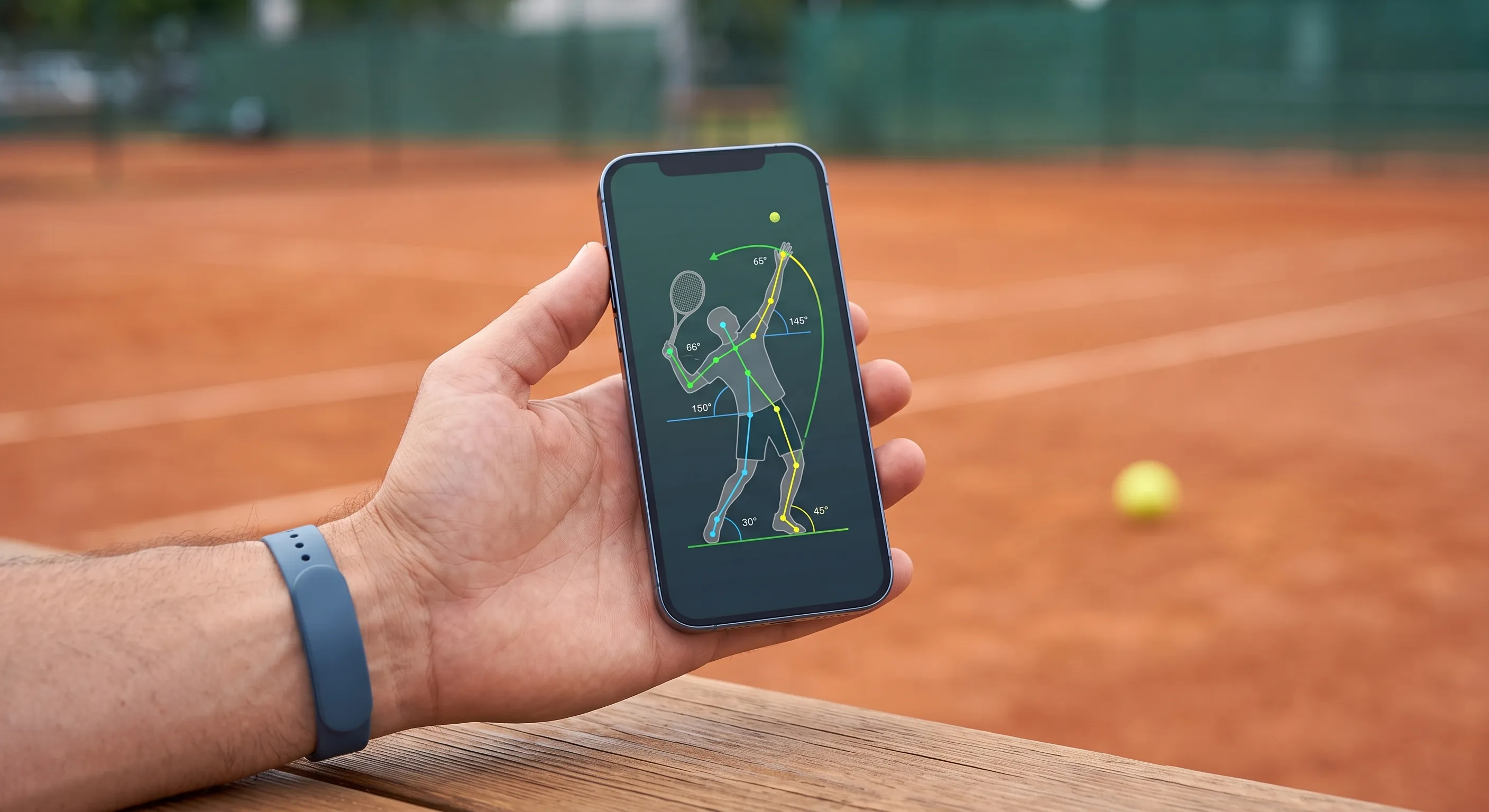
The good news is that analyzing serve technique no longer requires a specialist coach frame-by-freezing footage on a laptop. A handful of apps — some free, some freemium — now use AI to break down shot mechanics automatically, right from a phone camera. Here's an honest look at what's actually available, what each one is good at, and where the gaps are.
What "Technique Analysis" Actually Means
Before comparing apps, it's worth being clear about what you're looking for, since the term gets used loosely. There are really two different categories of tool:
- Shot tracking apps — these detect when a serve, forehand, or rally happens and report stats: speed, placement, in/out calls, rally length. They're excellent for match analytics but don't tell you much about the mechanics of the swing itself.
- Technique/biomechanics analysis — these look at the actual movement pattern: toss height, contact point, racket path, follow-through — and give feedback on what to adjust. This is the harder problem, and far fewer tools do it well.
Most parents actually want both — the stats to know what's happening, and the technique feedback to know why.
SwingVision
SwingVision is probably the most recognized name in this space, built by a team with backgrounds from Tesla and Apple, and it's officially recognized by several national tennis federations. Using just a phone camera, it tracks shot speed, depth, and accuracy automatically, calls lines with slow-motion replay, and generates match highlights with stats overlaid — genuinely useful for parents who want objective data without manually charting a match.
Strengths: excellent automated shot tracking and stats, strong for match analytics, free tier available, works well for line-calling in practice matches.
Limitations: the free version has reduced functionality, and the deeper coaching/technique feedback and full stat history typically require the paid Pro tier. It's also more focused on match-play analytics than isolated technique breakdown (e.g., analyzing a serve motion in slow motion outside of live play).
Dartfish
Dartfish takes a more manual, coach-oriented approach. It allows frame-by-frame playback with annotation tools, angle measurement, and side-by-side comparison — useful if a coach wants to draw directly on a serve motion to point out a specific flaw, like elbow position at contact.
Strengths: precise frame-by-frame and angle-measurement tools, good for side-by-side comparisons over time.
Limitations: this is a manual analysis tool, not an AI coach — a parent or coach still has to know what to look for and do the annotation themselves. It doesn't automatically flag technique issues.
Coach's Eye
A long-standing option for slow-motion and frame-by-frame review, Coach's Eye lets you record video and add voice or drawing notes directly onto the footage — a straightforward way to send a coach a clip with specific feedback attached.
Strengths: simple, accessible interface, good for sharing annotated clips remotely with a coach.
Limitations: like Dartfish, it's a manual review tool rather than an automated technique analyzer — value depends heavily on the reviewer's own expertise.
Wearable Sensors (Apple Watch, Garmin, Clip-On Devices)
It's worth addressing these directly, since many families already own one. Generic fitness wearables offer basic stroke counting and activity tracking, but wrist-based sensors are notoriously unreliable for actual swing mechanics — the sensor sits on the arm, not the racket, so the data on swing speed and spin tends to be rough at best. Dedicated racket-mounted sensors do better on raw swing data but are a separate hardware purchase, and most still don't provide the kind of visual technique feedback a video-based tool can.
What's Missing From Most of These Tools
Here's the honest gap across most of the options above: strong match-stat tracking (SwingVision) and strong manual video annotation (Dartfish, Coach's Eye) both exist, but they're separate tools, and neither is built specifically around a junior player's long-term development record — the match history, the technique progress over months, and a shareable profile all living in one place.
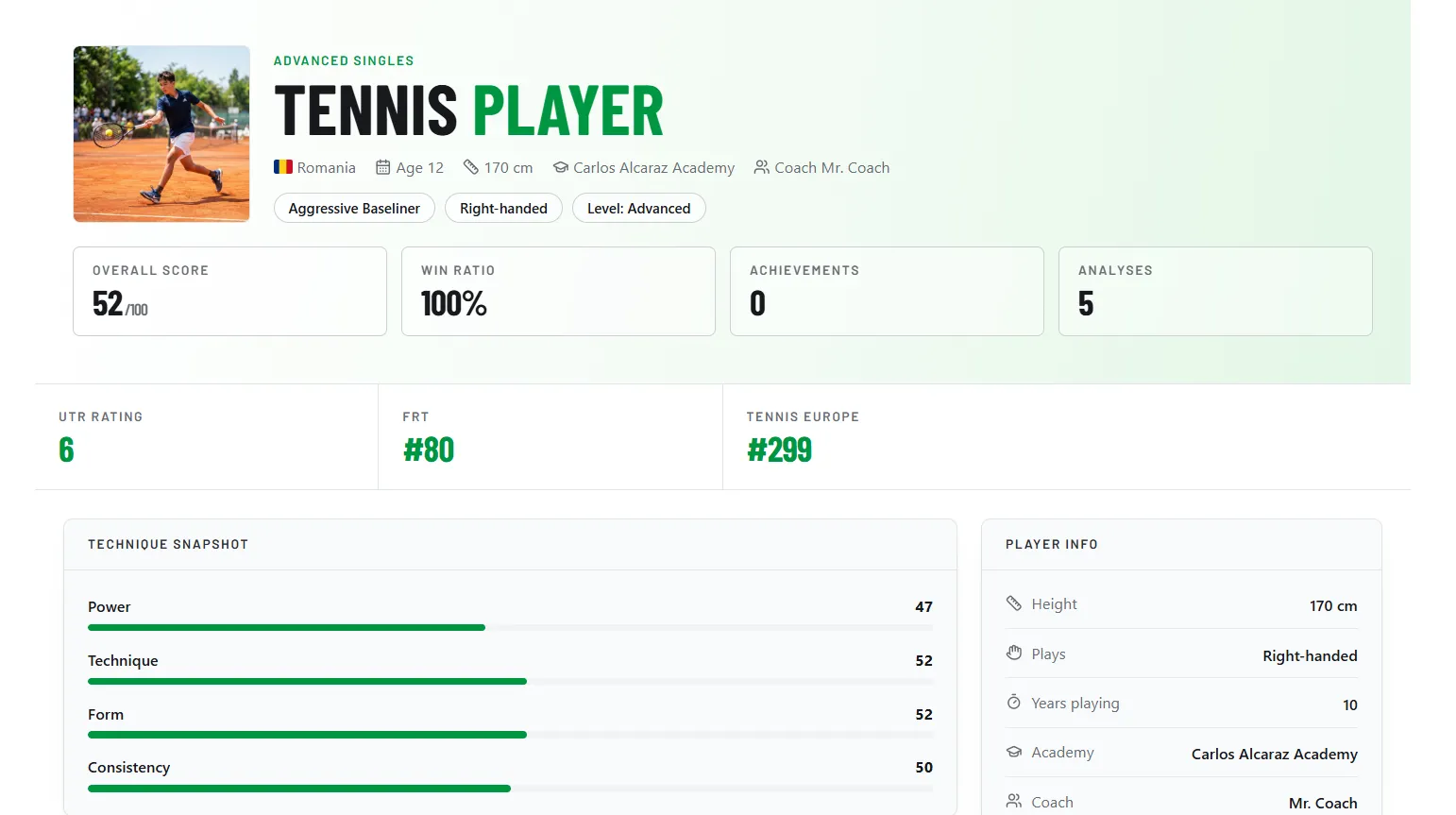
This is the specific gap the TennisDex dashboard is built to close. Upload a clip of a serve, forehand, or backhand, and AI-powered feedback breaks down the mechanics automatically — no manual frame-by-frame annotation required — while the same platform tracks match stats, win rate, and progress over time, and rolls it all into a profile that's ready to share with a coach or college recruiter when needed.
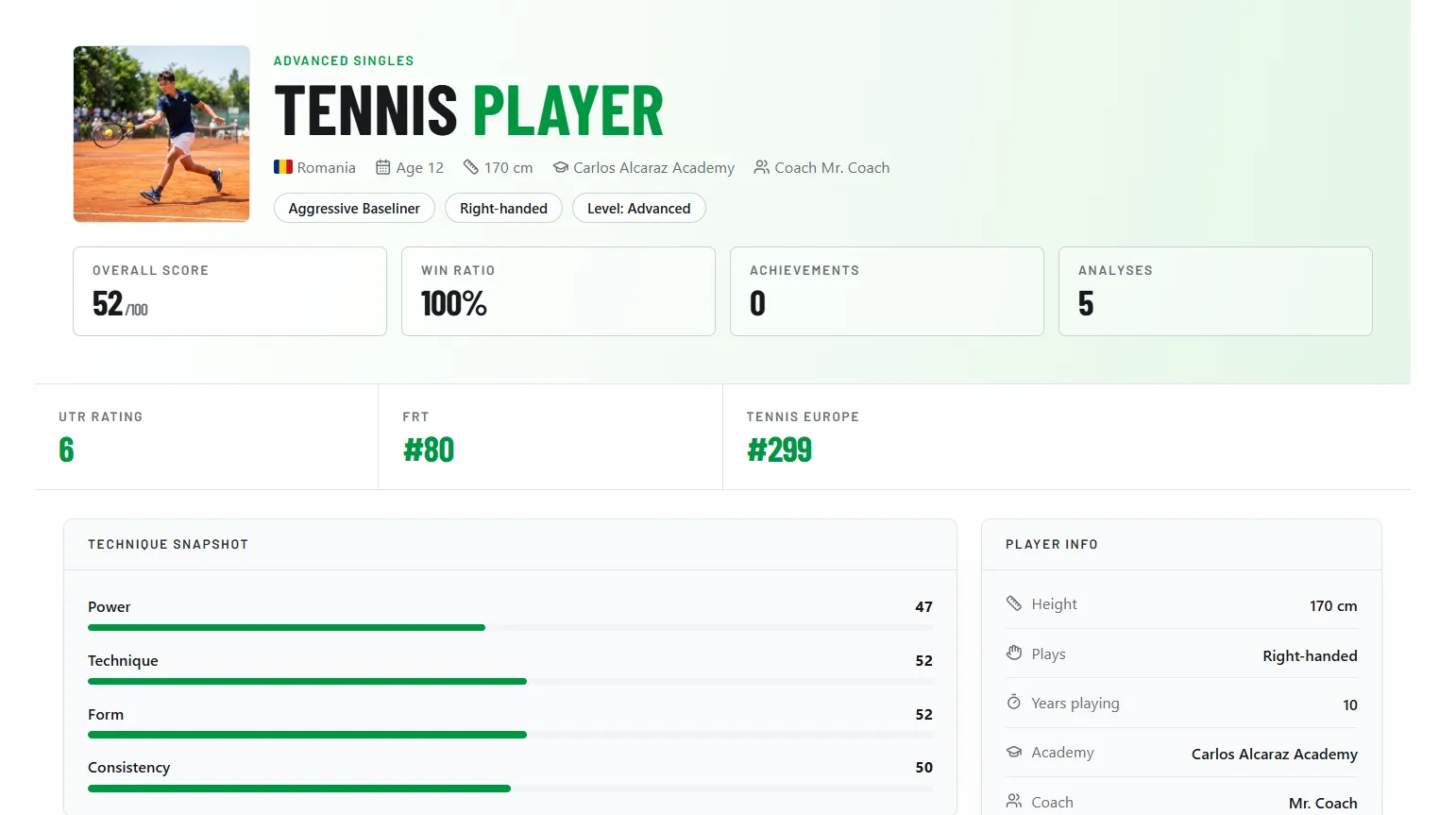
Get AI feedback on your serve, forehand, and backhand — free.
Upload a clip, get technique breakdown and specific recommendations, and track your progress over time — all in one place with your match stats.
Try AI Technique Analysis FreeHow to Choose, Practically
For most families, the right setup depends on what's actually missing right now:
- Want match stats without manual charting? SwingVision's free tier is a reasonable starting point.
- Want a coach to annotate specific clips remotely? Coach's Eye or Dartfish handle that well, assuming someone knowledgeable is doing the reviewing.
- Want technique feedback without needing a specialist to review footage manually, plus a running record that ties into match performance and recruiting? That's the specific combination TennisDex is built around.
None of these tools replace a good coach's eye entirely — but they do mean far less time is wasted between sessions wondering whether something in the technique actually changed, or just felt different that day.
Where to Learn More
- ITF Coaching and Development Resources — official technical and coaching publications
- Want to know what to track alongside technique? Read our guide on How to Track Your Junior Tennis Player's Progress
- Curious how technique and UTR feed into recruiting? See What College Tennis Coaches Actually Look For in a Recruitment Profile